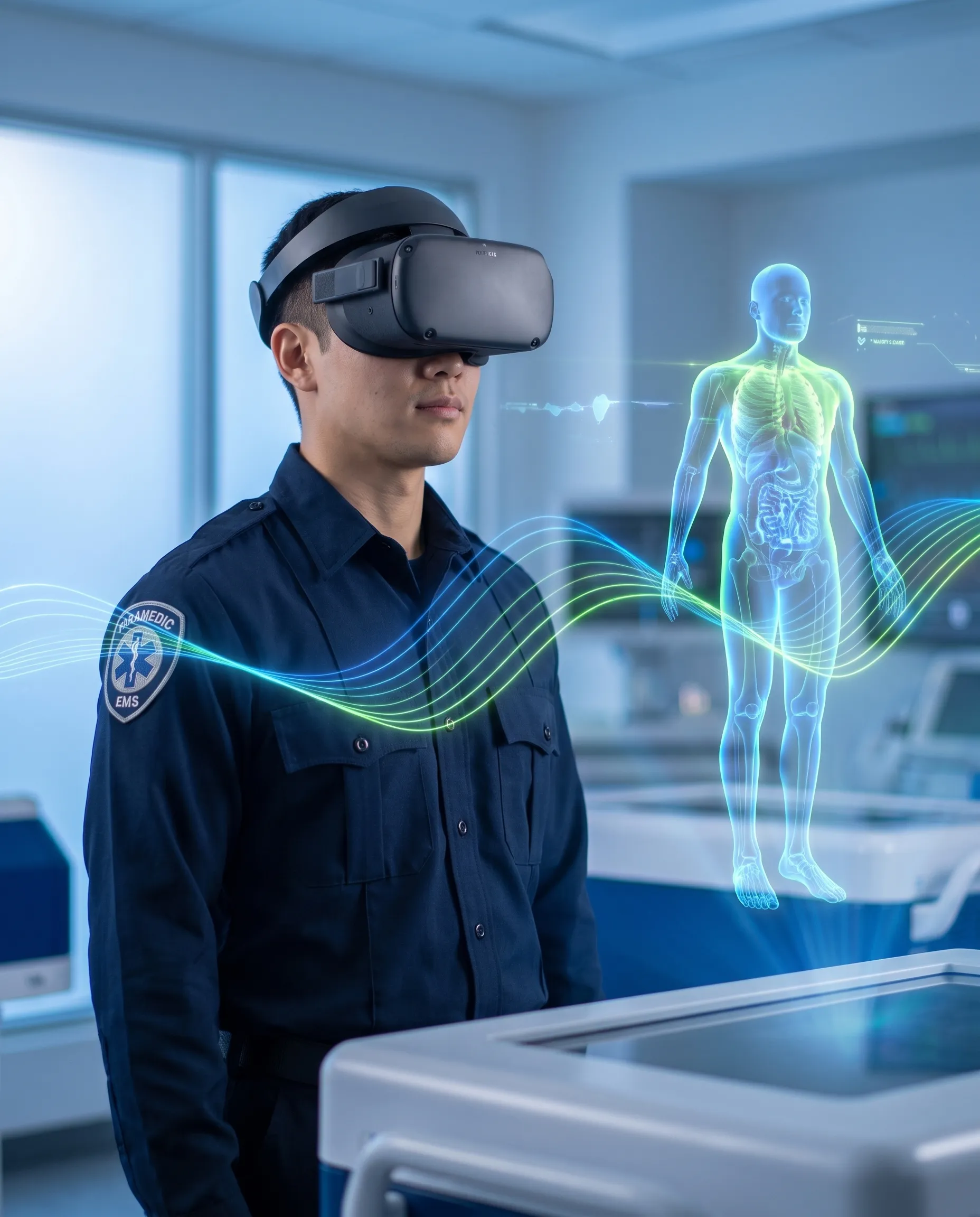
Students and responders
Practice until confidence replaces hesitation.
Repeat the hard moments as many times as it takes. Make the call, see what happens, and try again, without a real patient on the line.

For nursing and EMS education
VRpatients is a no-code clinical simulation platform. Nursing and EMS educators build the exact patient case they need, then run it in the browser, in VR, or on the manikins already in the lab.
Unlimited learners. Every discipline in the same scenario.
The impossible equation
That math does not close on its own. It closes when practice stops depending on scarce resources.
Clinical placements and ride-along hours are scarce and shrinking. Learning a skill should not wait on whether the right patient happens to show up.
One instructor can watch one learner at a time. Larger cohorts and thinner faculty mean less feedback per student, right when they need more.
Students and new responders do not need one more slideshow. They need another rep, and another, until hesitation turns into steady hands.
One product, three wins
Students and responders
Repeat the hard moments as many times as it takes. Make the call, see what happens, and try again, without a real patient on the line.
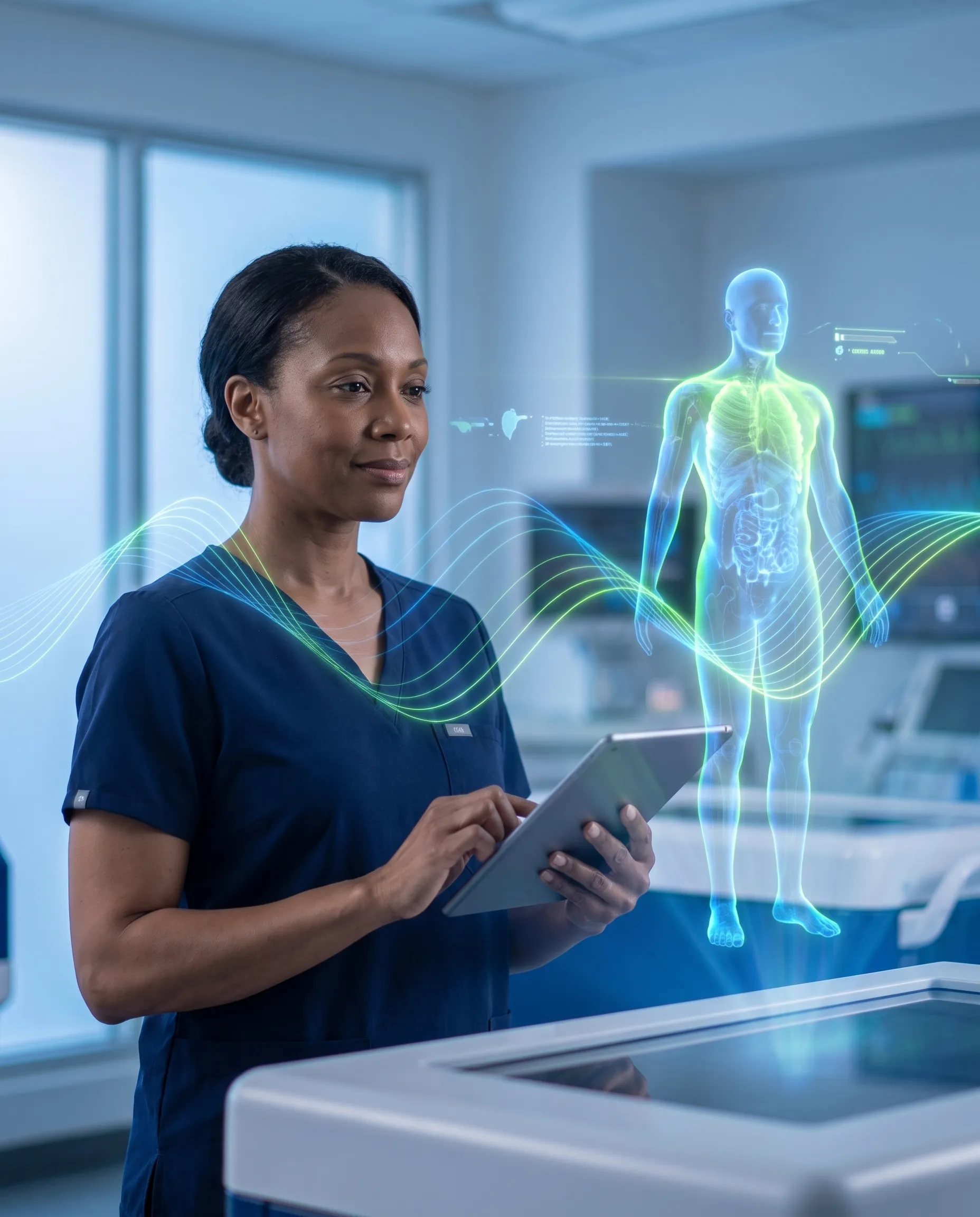
Faculty and training officers
Every learner gets consistent reps and objective feedback. You step in where judgment matters instead of running the same demo for the tenth time.
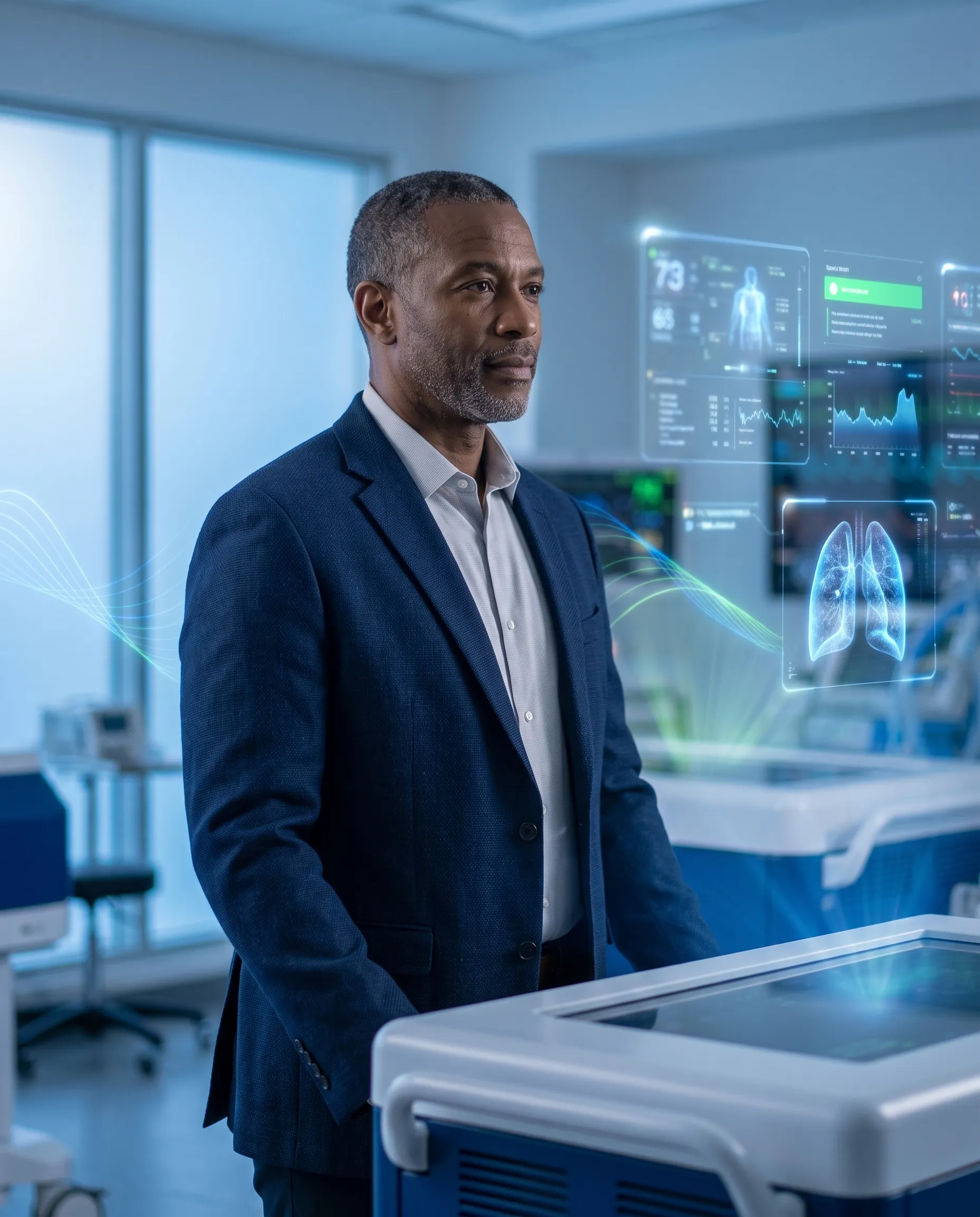
Deans and chiefs
Grow how much practice your program delivers without new lab space, more clinical sites, or another hiring cycle you cannot fill.
See it, do not just read about it
No download, no headset, no sales call first. Launch a short scenario, make a few decisions, and watch how the patient responds. This is the thirty-second version of what your learners practice for hours.
Placeholder
A stripped, browser-playable scenario: a patient walks in, you read the vitals, you choose what to do, and you get a clinical decision score at the end. Built as a purpose-made WebGL scene in a later week.
Program impact, in hours and reps
Move the sliders. The numbers show reclaimed instructor time and added practice, framed the way programs actually plan, in hours and reps, not a dollar figure we made up for you.
Illustrative only. Final figures come from a Finance-vetted model with sourced assumptions. No number here is a commitment.
The evidence, not the marketing
These are not our numbers. They come from the national nursing regulator, the association that tracks nursing programs, and peer-reviewed meta-analyses. Quote them.
Up to 50%
of traditional clinical hours can be replaced with high-quality simulation with no significant difference in program outcomes or NCLEX pass rates.
NCSBN National Simulation Study (Hayden et al.), Journal of Nursing Regulation, 201465,766
qualified applications to U.S. nursing programs were turned away in a single year, held back by shortages of faculty, clinical placements, and space.
AACN enrollment data, 2023 to 2024SMD 0.97
a large positive effect on knowledge from VR-based training versus traditional methods, pooled across 12 randomized trials and 1,167 students.
Liu et al., meta-analysis, BMC Medical Education, 2023SMD 1.13
a large positive effect on skill performance from VR-based training, confirmed in an independent meta-analysis of nurse education studies.
Huai et al., meta-analysis, Nurse Education Today, 2024One honest note kept in on purpose: the same research does not show a significant gain in critical thinking or clinical reasoning from VR, so we do not claim one. It shows gains in knowledge, skills, retention, and confidence.
Only now, the product
You have seen the problem, the payoff, and the evidence. Here is what does the work, and what each piece is actually for.
Patients that talk back, deteriorate, and respond to what the learner actually does. That is where the reps come from.
Build the cases your program needs, from a nursing code to an EMS field call, without waiting on a vendor content roadmap.
See where each learner hesitated and why. This is how one instructor gives feedback to a whole cohort.
Decision scores and trends over time, so progress is something you can show a board, not just feel.
Runs in a web browser and on Meta Quest. Practice happens in the lab, the classroom, or at home, no new room required.
Slots into the tools your program already runs, so simulation is part of the course, not a side errand.
Pricing, without the mystery
We are finalizing published pricing now. Here is the shape of it, so you can see how programs, departments, and institutions map to tiers.
A single nursing cohort or EMS academy getting started.
starts around $X
A full department running simulation across multiple cohorts.
starts around $XX
A college or agency standardizing simulation system-wide.
let's scope it
Bring practice to your program
See a scenario, scope your program, or just ask a question. No headset required to start the conversation.